
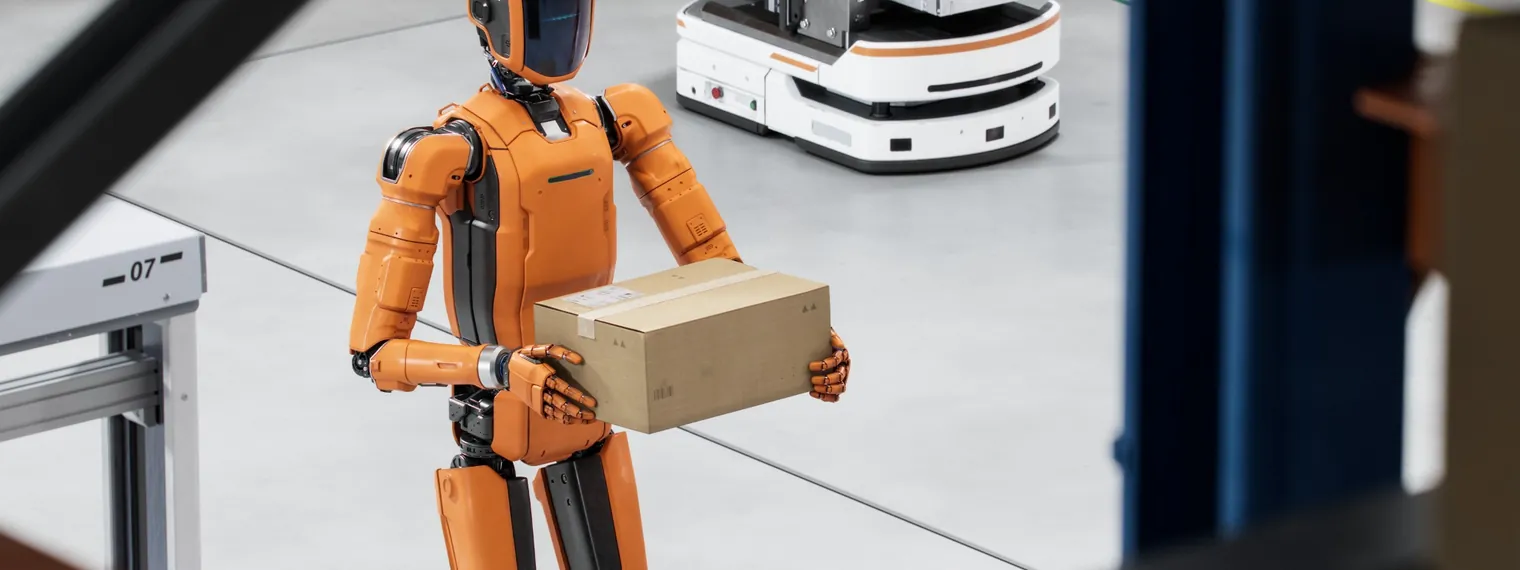
We’ve reached a legitimate turning point in eCommerce. It feels a lot like the low-code explosion we saw a few years back, but this time, autonomous AI agents are the ones rewriting the playbook. We aren’t just talking about basic bots anymore; we’re seeing AI handle the heavy lifting, from real-time inventory logic to autonomous checkout, without needing a human to watch over its shoulder every five minutes.
The numbers coming out of Gartner are wild. Task-specific agents are expected to jump from 5% of enterprise apps to 40% by the end of 2026. That is a total tech stack overhaul in record time.
But there’s a catch. Even though 70% of retailers are testing the waters, only 5% feel they are optimized. Most are hitting a wall. Why? Because you can’t run 2026-level AI on fragmented data and messy, legacy integrations. It’s the classic clash between innovation and infrastructure.
At Growth Acceleration Partners, we see this tension daily. Leaders want the speed autonomous AI promises, but they’re rightly concerned about reliability gaps. The answer isn’t to slow innovation; it’s to build a foundation strong enough to support it. The real challenge isn’t whether autonomous AI agents are coming; it’s whether today’s commerce platforms are actually ready to support them. And that question, readiness, is where the most important decisions of 2026 will be made.
Why This Challenge Is Critical Now
For years, AI in retail followed a familiar hype cycle: early excitement, inflated expectations, and cautious pilots. That phase is over.
As noted in the National Retail Federation’s 2026 Trends and Predictions, AI investments are becoming de rigueur for retailers, no longer viewed as experimental initiatives but as core components of the enterprise technology portfolio.
By 2026, AI will be embedded across search, discovery, marketing, pricing and customer service. The pressure has shifted from whether to invest in AI to how quickly organizations can operationalize it responsibly and at scale.
At NRF 2026, this reality was echoed across keynotes and sessions: AI-driven commerce simply does not work without accurate, real-time data.
At the same time, the industry is undergoing a deeper structural shift. New standards and platforms are enabling autonomous AI agents to interact directly with backend retail systems, inventory, pricing, promotions and checkout, without relying on a traditional web interface.
Retailers are no longer designing platforms exclusively for human shoppers. They are designing them for machines acting on behalf of humans.
As we noted in our recent deep dive, Architecting the Right AI Tech Stack, AI readiness isn’t about bolting new tools onto old systems. It requires intentional architecture built for real-time data flows and seamless integration at scale.
Legacy, batch-based systems simply weren’t designed for this level of speed or autonomy. Without a cloud-native foundation, even the most advanced AI models are constrained by outdated infrastructure.
The Real Business Impact: Experience, Scale and Revenue
In 2026, data quality is the customer experience and the engine of AI-driven commerce. Today’s customers don’t judge your brand in a vacuum; they compare you to the best digital experience they’ve ever had, whether that’s a streaming service or a high-end marketplace.
When AI-driven personalization works, it feels like magic. Customers find what they need, feel understood and keep coming back. But when it’s wrong, recommending out-of-stock items or mispricing products, trust vanishes in seconds. Customers don’t blame the algorithm; they blame the brand. In this era, bad data is a massive brand risk.
Scalability is the other side of that coin. Retail traffic is more volatile than ever. Social surges and AI-driven discovery can create sudden spikes that expose weak foundations. To thrive, modern platforms need:
- Real-time visibility across all warehouses and storefronts.
- API-first architectures that play nice with emerging AI standards.
- Synchronized pipelines so pricing and promotions reflect reality in the moment.
What We’re Seeing in the Market
The biggest names in retail aren’t waiting around. Walmart, Target and Gap Inc. have already moved past “innovation theater” and into deep, measurable execution.
Take Gap Inc. as an example. They’ve been vocal about using AI to solve the nightmare of inventory placement, balancing demand and geography to avoid stockouts. By getting the right product in the right spot, they’re seeing real-world productivity gains that have everything to do with operational discipline and nothing to do with hype.
Target has taken a similar path, focusing heavily on cloud modernization. Their goal is simple: real-time data access. When your teams stop guessing and start reacting to live data, you gain a massive edge. The “secret sauce” here isn’t a proprietary model; it’s unified data, elastic infrastructure and breaking down departmental silos.
We’re seeing this pattern repeat across the industry. For example, one large eCommerce retailer implemented an AI-driven inventory and fulfillment optimization platform built on a modern cloud data foundation. Within six months, the company reduced out-of-stock rates by more than 20%, improved inventory turnover by nearly 15% and saw a measurable lift in gross margin, all without increasing headcount. The takeaway was clear: AI delivered ROI not because it was autonomous, but because the underlying systems were finally capable of supporting it.
That’s the common thread among today’s successful retailers. The winners aren’t chasing AI for its own sake. They’re modernizing data and infrastructure so AI and increasingly autonomous agents can actually operate at scale in the new world of AI in retail.
The Expert Perspective: What Many Still Underestimate
The most common mistake we see is treating AI as a “feature.” AI doesn’t fix broken data; it amplifies it. If you deploy an autonomous agent on top of incomplete data, it will simply make the wrong decisions faster than a human ever could.
You can’t bolt 2026 AI onto 2010 architecture and expect 2030 results. The retailers winning right now are the ones treating data governance, cloud modernization and AI readiness as a single, integrated strategy.
What Retail CTOs Should Focus on in 2026
For engineering leaders, the priorities are now crystal clear:
- Unify the Foundations: Customer and inventory data must live in a single source of truth. AI initiatives live or die on data integrity.
- Modernize for Integration: Use modular, API-driven designs so you can swap or upgrade AI services without a total rewrite.
- Prioritize Trust Over Novelty: Accuracy and reliability matter more than a flashy demo. Your AI should be explainable and easy to override.
- Upskill the Team: Technology is only half the battle. Your people need the skills to monitor and govern these autonomous systems responsibly.
Looking Ahead
The conversation is no longer about whether AI belongs in commerce. That’s settled. The real question is how quickly you can modernize your foundation to support it at scale.
At GAP, we see this moment as a massive opportunity. The retailers willing to do the hard work of fixing their data, modernizing their platforms and aligning their teams are the ones positioning themselves for sustained growth, not just short-term wins.
What often makes the difference is having the right partners in place. GAP helps retailers lighten the load of modernization by bringing deep engineering, data and AI expertise, combined with high-performing teams across Latin America. This model allows organizations to move faster, stay focused on outcomes and scale transformation efforts without overloading internal teams.
The future of eCommerce is already here.
The only question left is: Is your technology ready to support it?