
By Paul Brownell, CTO, Growth Acceleration Partners (GAP)
For years, outsourcing was treated as a tactical decision. Nearshore outsourcing was seen as a way to fill open roles, accelerate timelines or manage costs. But that framing no longer fits the reality technology leaders face today.
Over the last two years, global resourcing has undergone a fundamental shift. What was once a capacity conversation has become a strategic one. Leaders are no longer asking, “Where can I find talent?” They’re asking, “How do I scale technology delivery while modernizing my platforms, adopting AI responsibly and reducing risk?”
In that shift, nearshore outsourcing has emerged as one of the most effective models for scaling modern technology teams, especially for organizations building revenue-generating applications, modernizing legacy systems and navigating rapid AI innovation.
But not all nearshore models are created equal.
Not All Outsourcing Models Are Built for the AI Era
There are two dominant approaches in the outsourcing market today. One is a managed aggregator model, where a U.S.-based leadership team coordinates work across multiple geographies and partner networks. That approach can work well when the goal is structured execution and centralized management.
The other model is built for velocity: a strategic nearshore partner with integrated teams operating in the same time zones, aligned culturally and embedded directly into the client’s engineering organization. That’s where nearshore becomes transformational, rather than transactional.
At Growth Acceleration Partners (GAP), we focus on the second model. And that’s because in modern product development, proximity isn’t just convenient. It’s a competitive advantage.
The most successful companies aren’t outsourcing tasks. They’re building integrated global teams designed to deliver outcomes. And they’re choosing partners who understand scaling in the age of AI requires more than just engineers; it requires strong operating models, modern delivery practices and deep technical expertise.
This is what we help GAP clients do every day.
What’s Changed in Global Resourcing Over the Last Two Years?
The pressures facing technology organizations have intensified, and AI has accelerated everything.
Today’s leaders are contending with:
- Ongoing talent shortages for specialized skills
- Increasing pressure to modernize legacy platforms
- Faster product cycles and shorter time-to-market expectations
- Heightened security and governance requirements
- Rapid adoption of generative and agentic AI
In this environment, scaling technology teams is no longer about adding headcount. It’s about building systems — both human and technical — that can evolve continuously.
This is why global resourcing has moved from a procurement function to a strategic growth lever. The right global model can increase velocity, improve resilience and enable AI adoption. The wrong model can introduce friction, risk and misalignment.
Nearshore outsourcing is accelerating because it addresses many of the challenges that traditional offshore models struggle with. This is particularly important when work demands constant collaboration, fast feedback loops and close alignment between engineering, product and business stakeholders.
Why Nearshore Outsourcing Is Growing So Fast
Nearshore outsourcing is often described simply as working with teams in nearby time zones. But that definition understates its real value and the significant nearshore outsourcing benefits.
Done well, nearshore outsourcing is not a transactional staffing approach. It’s a delivery model designed for speed, alignment and accountability.
The advantage comes from geographic proximity, operational integration and cultural alignment.
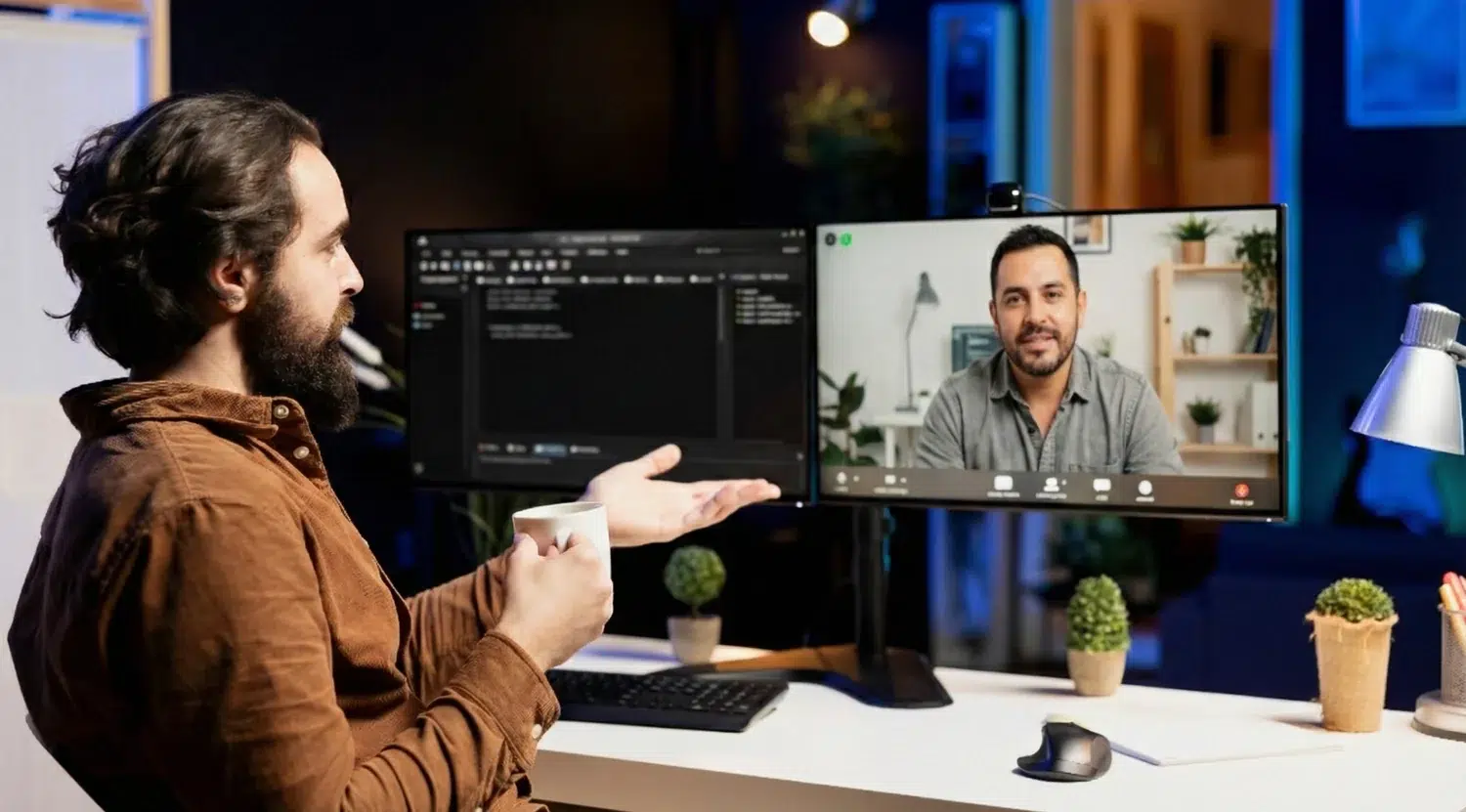
Nearshore teams in Latin America operate in overlapping time zones with U.S.-based teams. This allows for real-time collaboration, shared working hours and faster decision-making. Meetings happen during the same workday. Questions are answered immediately. Iteration cycles shorten.
We’ve moved past the idea that “work happens while you sleep” is automatically a benefit. The old “follow the sun” model may sound efficient on paper, but in practice, it often slows momentum with handoffs, context loss and delayed decision making. In the AI era, iteration speed is everything, and iteration requires real-time conversation, not ticket passing across time zones.
AI-enabled development is not linear. It requires experimentation, refinement and continuous collaboration across disciplines. When teams are separated by large time-zone gaps, friction increases. But when teams can work together in real time, momentum builds.
Nearshoring isn’t only about time zones; it’s about shared engineering culture. The best teams don’t just take orders. They ask “why,” challenge assumptions and help clients build the right thing. That level of engagement is much harder to sustain in disconnected, factory-style delivery models.
This is why many organizations are rethinking offshore-first strategies and turning to nearshore outsourcing for high-impact initiatives — particularly those tied to modernization, data platforms and AI.
Nearshore Outsourcing vs. Offshore: The Collaboration Gap
Offshore outsourcing can be effective for structured, well-defined work. But as technology initiatives become more complex, the limitations of offshore delivery models become more apparent.
Nearshore outsourcing offers a meaningful alternative when:
- Requirements are evolving
- AI models need tuning and validation
- Products require close stakeholder feedback
- Systems are mission-critical
- Governance and security are top priorities
In these scenarios, collaboration is not a “nice to have.” It’s a requirement.
Nearshore teams allow organizations to scale without sacrificing the tight feedback loops that modern engineering demands. And when teams are built intentionally with strong leadership, clear accountability and integrated delivery practices, nearshore outsourcing becomes a competitive advantage, not a compromise.
Scale alone does not create success. Some providers emphasize access to thousands of developers across multiple continents. But scale without continuity often leads to churn, misalignment and loss of institutional knowledge. High-performing teams are built on stability, shared context and trust over time, not sheer volume.
Choosing the Right Global Model Requires More Than Geography
One of the most common mistakes companies make is choosing a global resourcing model based on preference, rather than purpose.
Understanding the key nearshore outsourcing advantages is essential before selecting a global resourcing model. At GAP, we help clients evaluate nearshore, offshore and hybrid approaches using a simple but effective framework:
- The Nature of the Work
- Is the work tied directly to revenue? Is it customer-facing? Is it experimental or foundational?
- High-impact work benefits from tighter integration and higher collaboration.
- Collaboration Intensity
- How often do teams need to interact with product owners, stakeholders or end users?
- The more frequent the interaction, the more valuable nearshore becomes.
- Governance and Risk
- What level of oversight, security and operational maturity is required?
- Nearshore teams excel when strong governance and delivery leadership are essential.
- AI and Data Maturity
- AI initiatives depend on modern data infrastructure, scalable platforms and responsible governance.
- Teams must be aligned not just technically, but operationally.
Geography alone doesn’t determine success. The delivery model does.
This is where many outsourcing providers fall short. They focus on staffing and vendor management. GAP focuses on building integrated delivery systems designed for velocity, accountability and long-term transformation.
The Modern Nearshore Advantage: Talent, Specialization and Maturity
Nearshore outsourcing today looks very different, and across Latin America, technical talent ecosystems have matured significantly. Organizations are no longer sourcing only generalist developers. They are building teams with deep specialization in:
- Full-stack software engineering
- Cloud-native architecture
- Data engineering and analytics
- QA automation
- UX/UI design
- Application modernization
- AI enablement and platform integration
GAP engineers are organized into Centers of Excellence that provide leadership, research and ongoing development across critical technologies and practices. This structure ensures clients benefit not only from execution, but from continuously advancing expertise.
Equally important is continuity.
Because GAP invests heavily in our people through ongoing education, professional development and long-term career paths, clients benefit from high retention and stable teams.
As AI commoditizes basic coding tasks, the value of engineering shifts toward architecture, complex problem solving and empathy for business needs. The future isn’t about the lowest cost per hour — it’s about the highest value per sprint.
Nearshore outsourcing works best when teams are built to last, not rotate.
Generative AI Is Already Reshaping Nearshore Delivery
Generative AI is no longer a future concept. It’s actively changing how global teams operate today.
But the biggest gains are not coming from replacing engineers with AI. They’re coming from reducing friction across delivery. We’re seeing generative AI accelerate:
- Software development and prototyping
- Test creation and QA automation
- Documentation and knowledge transfer
- Onboarding and ramp-up time
- Code review and analysis
- Estimation and delivery forecasting
These are the areas that traditionally slow distributed teams down. When AI is embedded thoughtfully into workflows, it removes bottlenecks and allows teams to operate with greater speed and consistency.
Nearshore outsourcing amplifies these gains because teams can collaborate in real time, refine outputs quickly and maintain shared context.
AI tools are a turbocharger for application development. If you have a well-oiled machine, AI can help it run faster. But if your engineering processes are out of control, stepping on the gas only increases the risk. That’s why governance, operating maturity and strong delivery leadership matter more than ever.
At GAP, we approach AI as part of the delivery system, not a standalone toolset. The goal is always measurable value: faster delivery, higher quality and reduced risk.
Agentic AI and the Future of Distributed Work
The next evolution is already underway. Agentic AI — autonomous or semi-autonomous systems capable of executing tasks and coordinating workflows — will fundamentally change how work is assigned, managed and governed.
As we move toward agentic AI, the bottleneck won’t be writing code. It will be context. AI agents can execute tasks, but they still require business intent, architectural understanding and human oversight to remain aligned with real-world objectives.
We expect AI agents to become increasingly common in areas like:
- QA and regression testing
- Data validation and pipeline monitoring
- DevOps alerting and incident response
- Documentation and system mapping
- Workflow triage and task orchestration
These capabilities will allow human teams to focus on architecture, product strategy and innovation. But they will also introduce new governance challenges.
Nearshore teams have a structural advantage here because they operate in the same time zones as stakeholders and can maintain the shared context required to supervise and guide AI agents effectively. You cannot deploy autonomous systems successfully in a disconnected delivery silo.
Why GAP Is Different
There are many companies that offer nearshore outsourcing. But far fewer offer nearshore delivery models built for modern complexity.
GAP is different because we are not a staffing provider, and we are not a managed aggregator of disconnected vendors. Instead, GAP is a consulting and technology services company that builds integrated teams to deliver outcomes.
We combine nearshore delivery with deep expertise in software engineering, data platforms, modernization and AI. We invest in our people. We embed governance into delivery. And we partner with clients across the full technology lifecycle.
We don’t just manage work. We integrate with your culture, your architecture and your business objectives. We help you modernize responsibly, accelerate intelligently and build the future. Our engineers are not just executing a backlog.
This matters because nearshore outsourcing is no longer a cost play. It’s a growth strategy.
Companies that embrace nearshore AND use the right strategic partner will scale smarter, modernize faster and lead in the AI era. The organizations that combine strong engineering foundations with AI-enabled delivery will turn complexity into competitive advantage.
And the companies that will lead over the next decade won’t be the ones with the biggest headcount or the lowest hourly rate. They will be the ones that can modernize legacy systems without disruption, build new digital products with speed and discipline, and adopt AI in a way that is secure, governed and scalable.
Nearshore outsourcing is one of the most powerful ways to make that happen, but only when it is executed as a strategic operating model, not a transactional vendor relationship. AI is moving too fast, markets are shifting too quickly, and customer expectations are too high for outdated delivery models to keep up.
At GAP, we help organizations consult, design, build and modernize the software and data solutions that power growth. Whether you’re exploring global delivery for the first time, rethinking an offshore model that is slowing you down or trying to scale responsibly while adopting AI, the path forward starts with clarity.
If you’re ready to scale with speed, alignment and accountability, let’s talk. Our experts can help you explore how nearshore teams paired with deep modernization expertise and AI-enabled delivery can help you accelerate outcomes and build what’s next.